Journal · 5 min read
Cosmetic Dentistry CE: What a Hands-On Porcelain Course Should Cover
CE credits tell you a course met a standard. They do not tell you whether it will change your Monday schedule. Here is what I look for in the curriculum.

Credits are the receipt. They are not the reason you go.
Every cosmetic dentistry CE course you look at will list its hours. Far fewer will tell you what you will be able to do when you leave. That second question is the one I built my course around.
What AGD PACE approval tells you
AGD PACE is the Academy of General Dentistry's Program Approval for Continuing Education. A PACE approved provider has been reviewed against a set of standards for how courses are planned, delivered and evaluated, and its credits are widely accepted toward licensure and AGD fellowship and mastership.
Stribe is an AGD PACE approved provider. Art of Ceramic is a two-day course worth 16 CE credits. After the course you receive a course attendance certificate, and if you are an AGD member and give us your AGD number, we submit your attendance to the AGD. Every attendee also gets an evaluation, because the standard requires it and because it is how the course gets better.
That is what approval tells you: the course is organized, documented and accountable.
What it does not tell you is whether the course is any good at teaching porcelain. For that, read the curriculum.
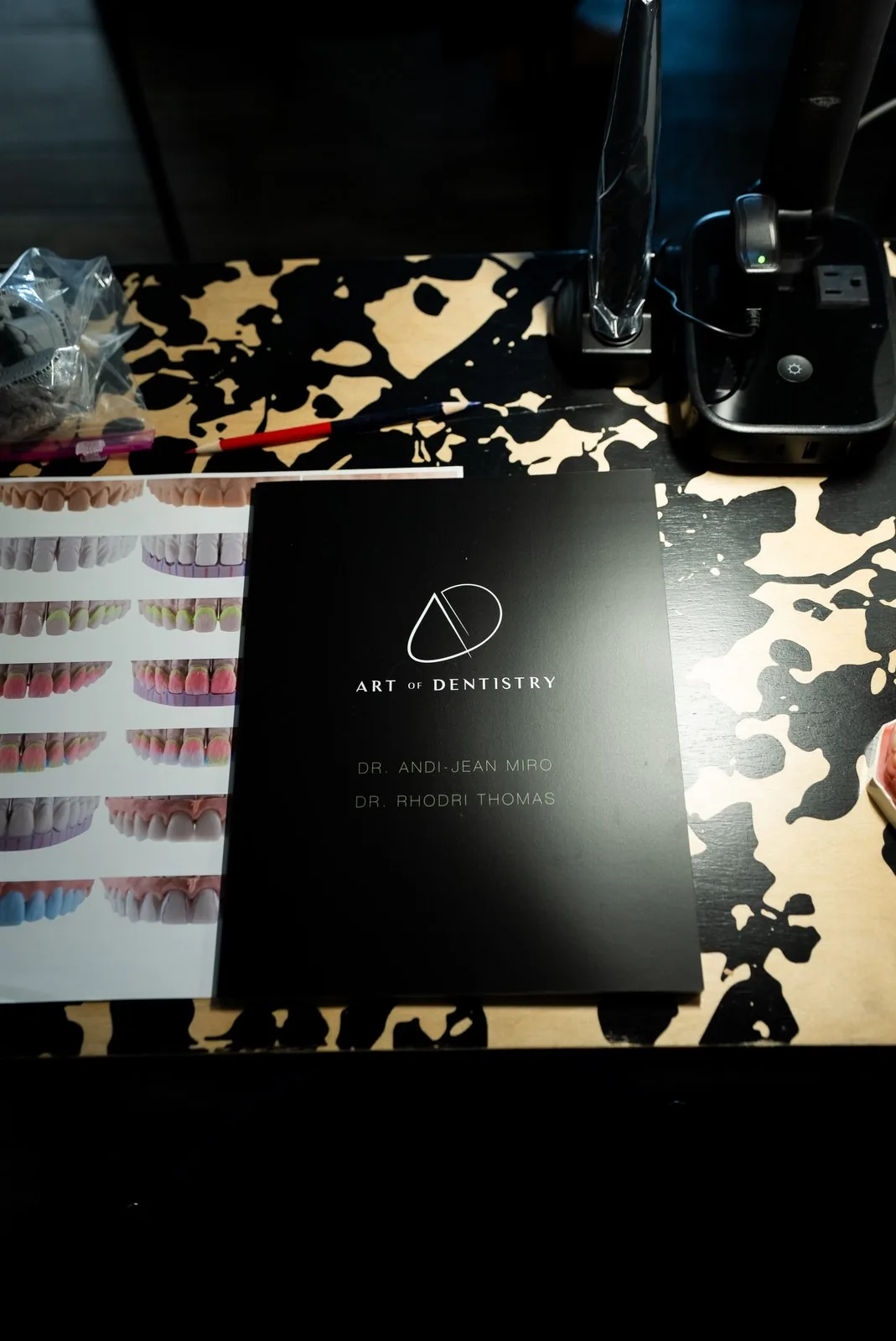
The eight things a porcelain course should cover
A veneer is the last thing you place. A cosmetic course that starts at the prep has skipped most of the case. Here is the chain I expect a hands-on porcelain course to cover, in order.
1. The consultation
Case acceptance starts before the patient sits down. The phone call, the welcome, the room, the questions your treatment coordinator asks about timelines and budget.
I always say the consultation is like an interview. I am interviewing the patient, and they are interviewing me. And when you finally present the plan, the first person to talk loses.
2. Facial analysis
We start every course with full face photographs, because cosmetic dentistry is not a smile close-up. It is a face. Facial midline, interpupillary line, facial thirds, cant. A collapsed lower third tells you about wear and bruxism before you look inside the mouth.
I also teach that perfection does not exist in nature. Small asymmetries are part of beauty. Make everything symmetrical and you lose it.
3. The mock-up
The direct mock-up does two jobs at once. The patient sees the result on their own face, in a mirror, while you show them how little you need to touch their teeth. And you learn exactly where you will need to prep.
When I ask a lab for help, I ask for an addition and reduction mock-up, not only a full contour wax-up. A wax-up on a ground-down model can look beautiful and tell me nothing about preparation.
4. Arch first, then prep
Before I cut individual veneer preps, I develop the arch. Flared teeth come back into the arch. Lingually inclined teeth get prepped from the inside to bring them out. Once the teeth are aligned in the arch, the individual preps are simple.
Prep design should be minimal and deliberate, and it should be practiced on models before it is practiced on people.
5. Shape
Rhodri teaches that it all comes down to shape. Line angles control how wide a tooth reads. A domed mid-facial kills the way light ripples across the surface. Round teeth with heavy incisal translucency look wrong on a patient with full lips.
Translucency is a tool, not a goal. Long teeth that need to look shorter can take more of it. Short teeth that need to look longer should have very little.
6. Temporization
Provisionals are where the patient lives with the design. They are your test drive for function, phonetics and esthetics, and once they are right, they become the blueprint the lab works from.
7. Photography and lab communication
The ceramist has never met your patient. Photographs, measurements, shade and the design details are how you get back what you planned. A course that skips this section sends you home to lab work that does not match your mock-up.
8. Cementation
The final step needs a protocol you can repeat. One example: Rhodri used to isolate with retraction cord during cementation and stopped, because a cord fiber caught under a veneer stays there for good. Details like that are why cementation deserves its own section, not the last ten minutes of the day.
Format matters as much as content
The same eight topics can be taught as a lecture or taught at a bench. Only one of those changes your hands.
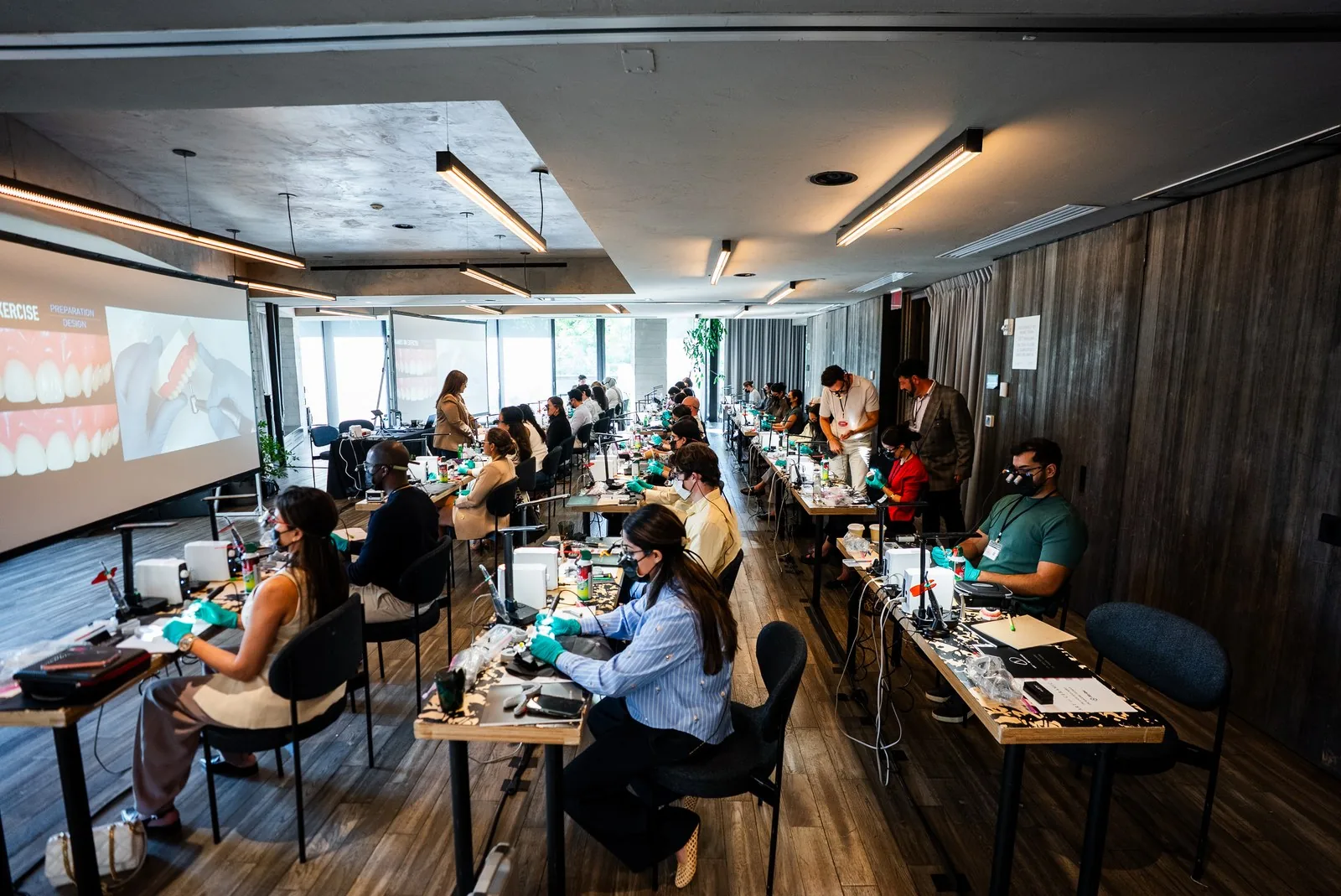
Look for a format where every major section is demonstrated and then done at your own bench, with instructors walking the room. In Art of Ceramic, Rhodri and I coach at every seat. You leave with notes and a printed book with every protocol, so you can repeat it on Monday.
I remember being one to three years out, nervous about the questions my patients asked. Nothing feels scary now, and that came from repetition, not from slides.
Questions to ask before you enroll
- Is the provider AGD PACE approved, and how many credits is the course?
- Does the agenda cover consult to cementation, or one slice of it?
- How much of each day is at your own bench?
- Do the instructors still treat patients and show their own cases?
- Is the course sponsored, and by whom?
Know the standard. Read the curriculum. Then pick the course that puts the work in your hands.
Related reading: how AGD PACE credits work and how to choose a hands-on veneer course.
Questions, answered.
How many CE credits is Art of Ceramic?
Art of Ceramic is a two-day course worth 16 CE credits. Stribe is an AGD PACE approved provider, and you receive a course attendance certificate after the course.
What does AGD PACE approved mean for a cosmetic dentistry course?
It means the provider has been reviewed by the Academy of General Dentistry against standards for how courses are planned, delivered and evaluated. It does not judge clinical technique, so read the curriculum as well.
Will my credits be reported to the AGD?
If you are an AGD member and share your AGD number, Stribe submits your attendance to the AGD after the course.
Is a hands-on porcelain course suitable for newer dentists?
Yes. The workflow is taught step by step and practiced on models first, which is where newer dentists build confidence before treating patients.