Journal · 6 min read
Dental Team Training for Cosmetic Dentistry: Start With the Handoffs
Your team should not have to guess how to support the experience you are trying to create.
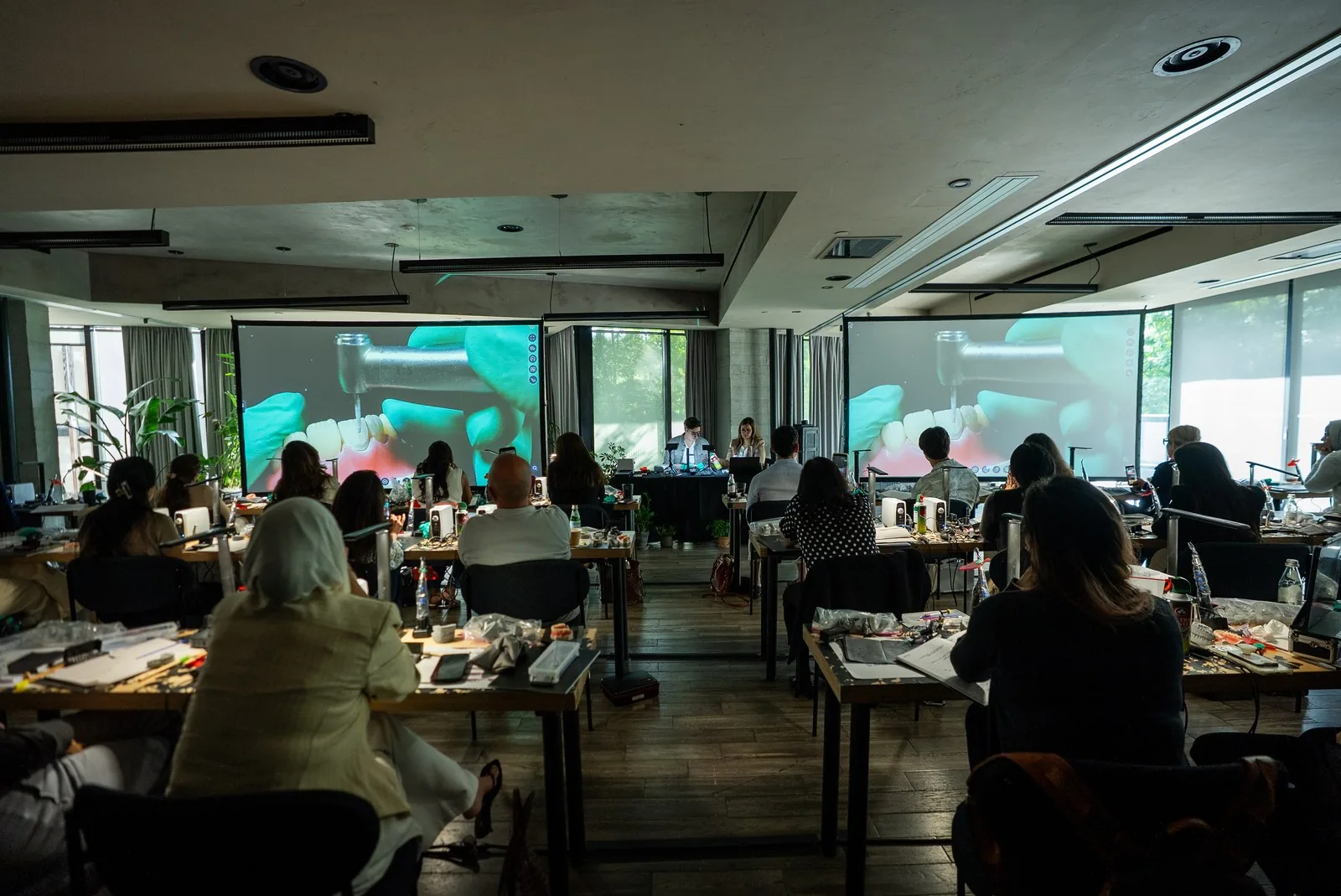
Your team is not the background of your cosmetic practice.
They are the people your patient meets before you walk into the room.
When I talk about dental team training for cosmetic dentistry, I am not talking about teaching everybody to give the same sales pitch. I am talking about making sure the experience makes sense from one person to the next.
The treatment coordinator, the assistant and the dentist have different responsibilities. But the patient should not feel as though they have entered three different practices.
In our course, I say that your staff is just as important as you are. They are a reflection of you. That means their training deserves the same attention as the clinical skill you are working so hard to develop.
Start by listening to the first conversation
Before you rewrite your consultation presentation, look at what happens on the phone.
Does the person answering introduce themselves? Do they explain their role? Do they find out why this person is calling now?
I talk about asking whether a life event is prompting the patient to address their smile. That is useful context. Someone preparing for an event may have a timeline in mind that nobody has discussed yet.
Your team does not need to make a treatment recommendation on the phone. They need to understand the reason for the visit and communicate the next step clearly.
A useful training exercise is to rehearse that first conversation together. Not to produce a script that sounds rehearsed. To hear where the explanation becomes confusing.
If you would not say it to a person sitting in front of you, do not ask your coordinator to say it.
Agree on the language before it reaches the patient
Words create a picture.
In my teaching, I use the example of describing a tooth as a stump. You may mean something very specific clinically. The patient hears a frightening image.
That does not mean we should hide what treatment involves. It means we should choose accurate language that someone without a dental education can understand.
Ask your team which words patients repeat back with concern. Then discuss how you explain those ideas.
The aim is not to remove every difficult conversation. It is to avoid creating confusion with language we have stopped noticing.
I also want the explanation to sound like us. The way I speak while teaching is the way I speak with patients. A warm phone call followed by an impersonal consultation is not consistency.
Your team needs to understand the meaning behind the words, not just memorize them.
Make the handoff carry something useful
In our practice, the treatment coordinator who spoke to the patient will usually greet them and bring them into the consultation space.
There is continuity in that.
Even if your staffing works differently, you can look at what information moves with the patient. What brought them in? What are they hoping to change? What questions have already come up?
I would begin with those details rather than creating a long form nobody uses.
The handoff should help the next person listen better. It should not become a label that decides who the patient is before you have met them.
If someone has described their concern in their own words, keep those words available. Do not automatically translate everything into a procedure.
A person asking about their smile is not necessarily asking for the treatment you have in mind.

Explain why the records matter
In the course, I describe the photographs we put on the screen during the first visit: a full-face smile, a closer smile view and a retracted view.
Those images are part of the conversation, not just files collected for the chart.
Your team should understand what the dentist needs to see and how those records support the discussion. That is different from asking someone to press the shutter and hope the photographs are usable.
For training, review the records together. Can you see the face? Can you see the smile clearly? Is the information you need actually there?
Keep the discussion specific. Telling an assistant to take better pictures is not teaching. Showing what is missing and why it matters gives them something they can work with.
For the technical side, start with our dental photography settings guide. Then connect the settings to the views your own clinical protocol requires.
Prepare the assistant for the conversation, not only the tray
When I show a direct mock-up in the course, my assistant is part of that moment. The materials are ready. The support is there while I talk with the patient.
That coordination is easy to overlook when you watch only the dentist's hands.
Your assistant needs to understand what is happening next, what you are trying to communicate and what support you will need. The dentist remains responsible for the clinical decisions and explanation.
I would rehearse the sequence without a patient first. Where does each person stand? What needs to be within reach? When will you need the photograph?
The rehearsal is not permission to delegate beyond anyone's training or legal scope. It is a way to find the avoidable interruptions before the appointment.
You cannot expect anticipation if you have never explained the sequence.
Look at the experience from the chair
In my teaching, I ask dentists to think about what the patient sees when they lean back.
We spend so much time looking into the mouth that we can forget the view from the other direction.
Comfort is part of the experience. I discuss headphones, music and blankets as examples. The point is not that every practice needs identical amenities. The point is that somebody has thought about the person sitting there.
Bring your team into that conversation. Ask what patients request repeatedly. Ask where they seem unsure about what happens next.
The people supporting the appointment often notice things the dentist misses.
Do not ask for that feedback and then treat every answer as criticism. You are trying to make the experience clearer together.
Train one handoff before changing everything
I would rather see one improvement your team understands than a new binder nobody opens.
Choose a handoff. Rehearse it. Make sure everyone knows who owns the next step and which questions must come back to the dentist.
Then review what happened. Did the patient need to repeat information? Did the assistant have what was needed? Did the next person know what had already been discussed?
Those questions will not tell you everything about a cosmetic practice. They will give your next training conversation a useful starting point.
Clinical education matters. So does the team that helps you put it into practice.
Related reading: cosmetic case acceptance and choosing a hands-on veneer course.
Questions, answered.
What should dental team training for cosmetic dentistry include?
Start with phone communication, clear language, useful handoffs, preparation for records and an understanding of each person's role. Clinical decisions remain with the dentist, and delegated tasks must stay within appropriate training and legal scope.
What is the treatment coordinator's role in a cosmetic consultation?
The coordinator helps understand why the patient is seeking care, gathers relevant context and explains the next step. In my course, I emphasize the initial conversation and continuity into the visit, not having the coordinator diagnose or choose treatment.
How can I help my assistant understand cosmetic dentistry photography?
Review the required views together and explain what each image needs to show. Give specific feedback about missing information rather than asking for better photographs without explaining what that means.
Where should I start if my dental team needs training?
Pick one handoff, such as the transition from the initial phone call to the first visit. Rehearse the conversation, clarify responsibilities and review where information was lost. Build from that rather than trying to rewrite the whole practice at once.