Journal · 5 min read
Feldspathic Veneers on Refractory Dies: What Dentists Should Know
Feldspathic porcelain is the material I favor for anterior veneers. It is also the one that asks the most of everyone in the chain, starting with the dentist.
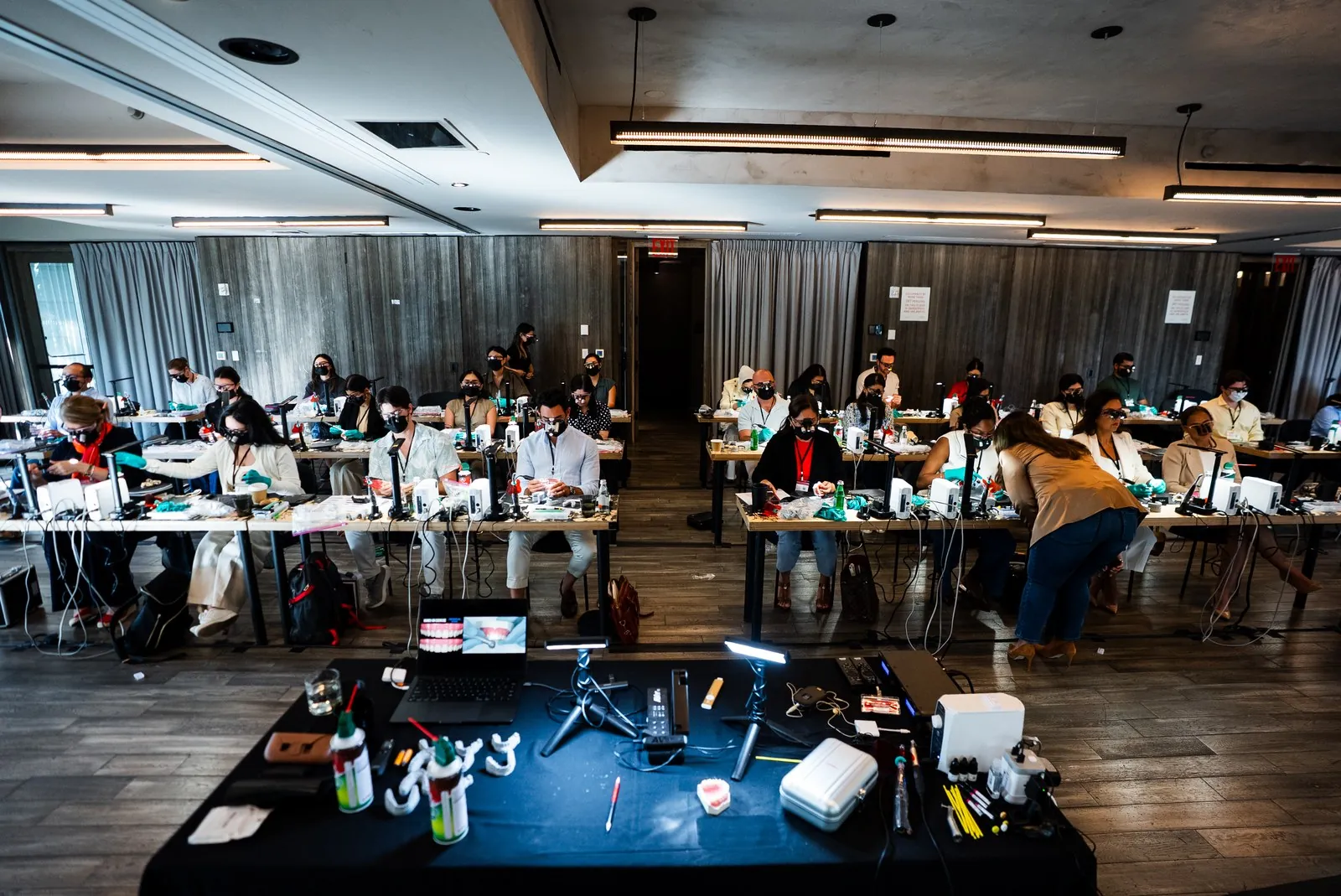
Feldspathic porcelain is the material that is most favorable in my eyes.
It has a vitality that pressed and milled ceramics struggle to match. It is also less forgiving. It needs a skilled ceramist, a sound bite and a dentist who gives the lab the right information.
If you are planning feldspathic veneers, or choosing a feldspathic veneer course, this is what I want you to understand first.
What a refractory die actually is
Feldspathic veneers are layered by hand, powder and liquid, then fired in a porcelain oven. The ceramist needs something to build on that can survive the oven.
That is the refractory die.
The workflow starts with an accurate master model of your preparations. From that model the lab makes individual dies. A resin or stone die cannot go into a ceramic oven, so the dies are duplicated in silicone, and the mold is poured in a refractory material that holds its shape at firing temperature.
The ceramist then layers porcelain directly on that refractory die, fires it, adds and fires again, and finally divests the veneer.
The die is a copy of your prep. Every margin you cut, every undercut you leave, every rough line angle, ends up in the porcelain.
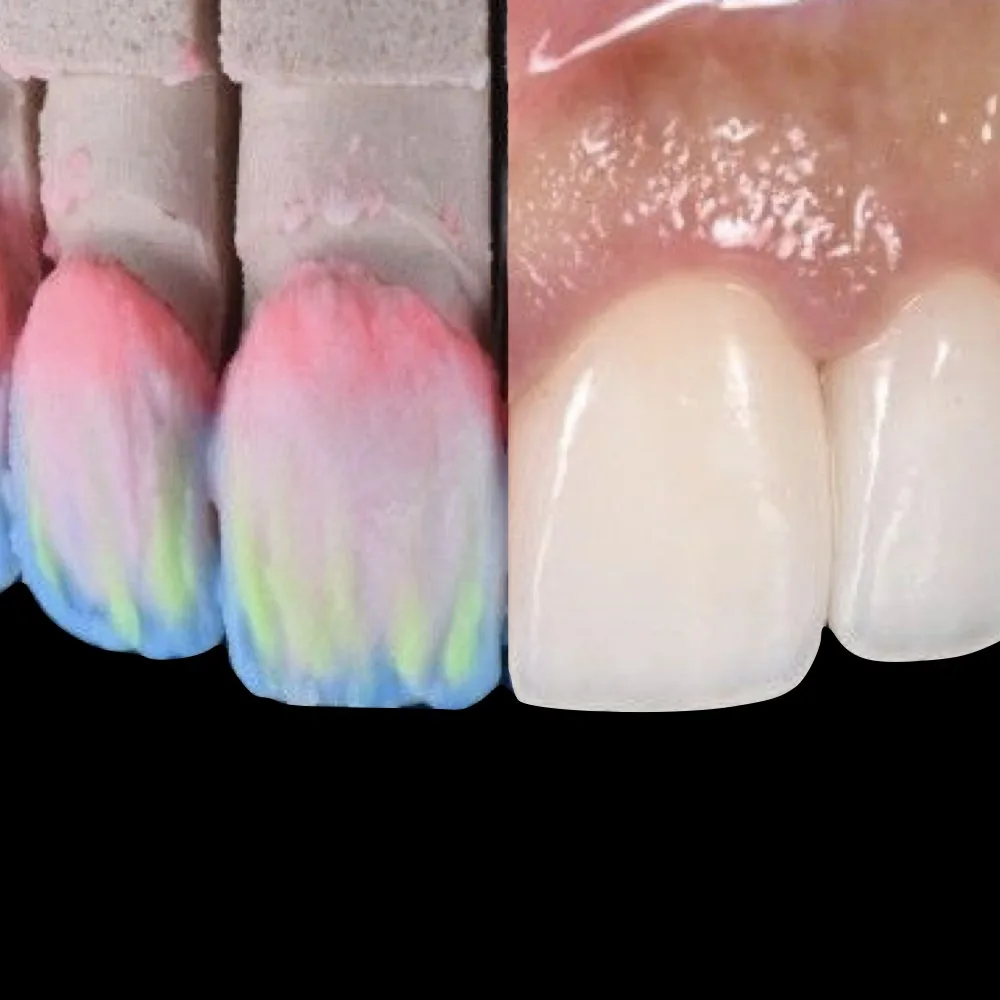
Refractory die or platinum foil
There is more than one way to build a feldspathic veneer, and you should know which one your ceramist uses.
One of the ceramists I work with builds on platinum foil. He adapts a thin layer of foil over the die, and that foil acts as a little spacer. Veneers made this way fit differently. They are not as intimate. You can almost seat a foil veneer a few different ways, and it will still bond.
When the porcelain is built right onto a refractory die, the fit is more intimate. The veneer seats one way.
Neither is wrong. They are different, and they change how you prep and how you try in. Do not guess. If you have a question in your mind, talk to the person who is going to make the case.
Why I reach for feldspathic
Teeth are not flat colors. They have halos, opalescence and depth, and they change with age. Dr. Rhodri Thomas, who co-teaches Art of Ceramic with me, likes to remind the room that natural teeth have been measured at 1,173 distinct shades, and the shade guides most of us still use were designed in the 1950s for metal-ceramic crowns.
Layered feldspathic is how a ceramist reproduces that depth. Rhodri prefers it for its aesthetics too. In his words, it requires a skill and a niche. In the UK he cannot find a ceramist who layers feldspathic veneers to the standard he wants, so he sends those cases abroad.
That tells you something. The material is only as good as the hands building it. Before you sell a feldspathic case, know who is going to layer it.
Where feldspathic fails: the bite
Here is what nobody tells you about the most beautiful option. It is the least tolerant of a bad bite.
I had a patient with flared, crowded lower anteriors. In protrusive, her lower incisor locked straight into her upper central like a key. If I put feldspathic on top of that occlusion, it was going to chip or break.
So I had a real decision. Do I compromise the aesthetic, choose a stronger material and hope it wears well? Or do I fix the occlusion and use the material I actually want?
We fixed the occlusion.
Treat the bite before you choose the porcelain. If the patient will not address the function, you are choosing a material for the wrong reason.
Thin is a skill, not a setting
Prepless and ultra-minimal veneers are everywhere right now. It is cyclical. It was popular years ago, faded, and is back again.
Rhodri said it plainly in our course: not every ceramist can do prepless work. Getting feldspathic that thin takes real skill, and the patients who are true prepless candidates are rarer than social media suggests. Done in the wrong mouth, you get bulky veneers, poor emergence and inflamed gums.
My own approach has changed over the years. Most of my prepless work now is on premolars and molars. In the anterior I almost always place a finish line, because interproximal recession that shows a margin is far more noticeable up front. A finish line also gives you and the ceramist a clear seat, so the veneer goes where it was designed to go.
The die is only as good as the information
The ceramist has never met your patient. Everything they know comes from you.
That means photographs, shade and shape. I am guilty of this too, so no judgment: "Please make me veneer number eight, A2. Thanks." That prescription will not get you a good result.
In our workflow, the approved temporaries are the blueprint. We take an index of the temporaries so the ceramist can layer to the incisal position the patient already approved, finalize texture, and confirm position with the index before the porcelain goes on the refractory model.
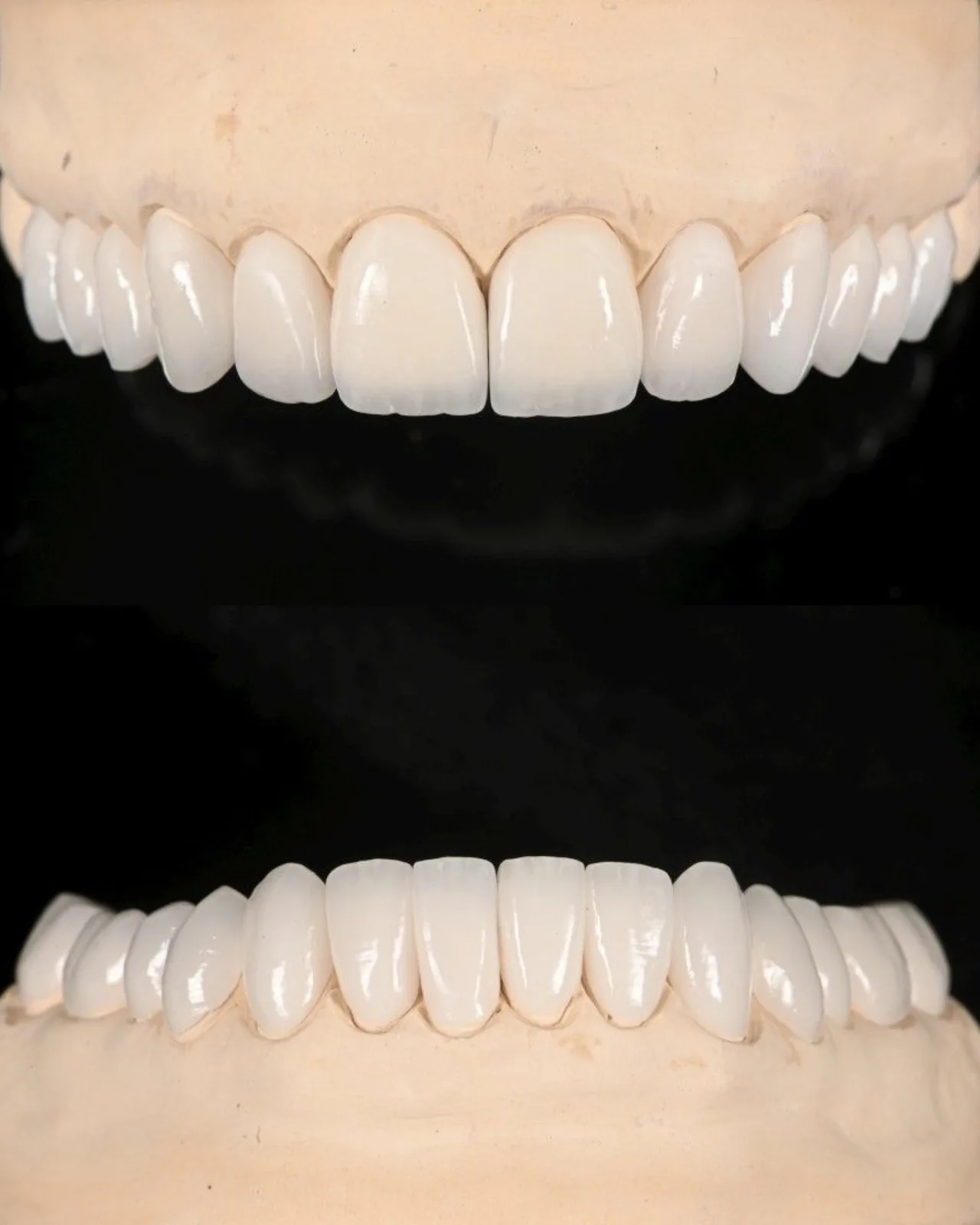
What to ask your ceramist before you prep
Have this conversation before the case starts, not after the preps are cut:
- Do you build on refractory dies or platinum foil? It changes the fit and your try-in.
- How much space do you need for the shade change we are planning?
- Do you want a finish line on this case, and where?
- What photographs do you want, and with which shade tabs in frame?
- Is this patient's occlusion safe for feldspathic? If not, what would you use?
Then follow the guidance. You want to give your ceramist the best possible opportunity.
Know your material. Know your ceramist. Know your patient's bite. Then prep.
Related reading: the full lab workflow from impression to refractory model and minimal-prep versus no-prep veneers.
Questions, answered.
What is a refractory die in dentistry?
A refractory die is a duplicate of the prepared tooth made from a heat-resistant investment material. The ceramist layers feldspathic porcelain directly on it and fires it in the oven, which a stone or resin die cannot withstand.
Is a refractory die better than platinum foil for veneers?
Neither is universally better. Veneers built directly on a refractory die tend to fit more intimately, while platinum foil adds a thin spacer and gives a looser fit. Ask your ceramist which technique they use and prepare accordingly.
Are feldspathic veneers right for every patient?
No. Feldspathic is less tolerant of heavy or unstable occlusion and can chip or fracture if the bite is not addressed. It also depends on a ceramist who is skilled at layering.
Where can dentists learn the feldspathic veneer workflow?
Art of Ceramic covers prep design, shape, photography, lab communication and cementation for porcelain veneers over two hands-on days. For the lab side, The Master Model follows one case from impression to refractory die.