Journal · 4 min read
How to Write a Veneer Lab Prescription Your Ceramist Can Use
The ceramist has never met your patient. Your prescription is the only version of that person they will ever see.
"Please make me veneer number eight, A2. Thanks."
We have all written some version of that. It will not get you a good result.
I work with an in-house lab at Apa Aesthetic now. For many years before that, I sent my cases out. Whether the ceramist is down the hall or in another state, the rule is the same: they build what you communicate, and nothing more.
The ceramist is working blind
The person layering your porcelain is working on a model. They do not see the face. They do not hear the patient say "natural is really important to me."
So when a ceramist at the bench sees that you want the right side built out further than the left, they may correct it and make it symmetrical. Unless they can see why. In a case where one side of the smile is weaker, we build that side out more so the smile looks balanced in the face. That only works if the lab has the face.
Your job is to give them every resource: measurements, models of the temporaries, photographs of the temporaries, scans of the temporaries.
What goes in the prescription
1. Photographs. The full series, plus a full face smile, plus the shade photos: three tabs in the same plane as the teeth and one slightly underexposed shot for translucency.
2. The temporaries. The approved provisionals are the design. Send scans and photographs of them, and say clearly that the final should follow them.
3. Measurements. Rhodri measures the teeth in the mouth with digital calipers and writes down where he wants them to be. When he asks for a wax-up, it is not arbitrary. He has measured it.
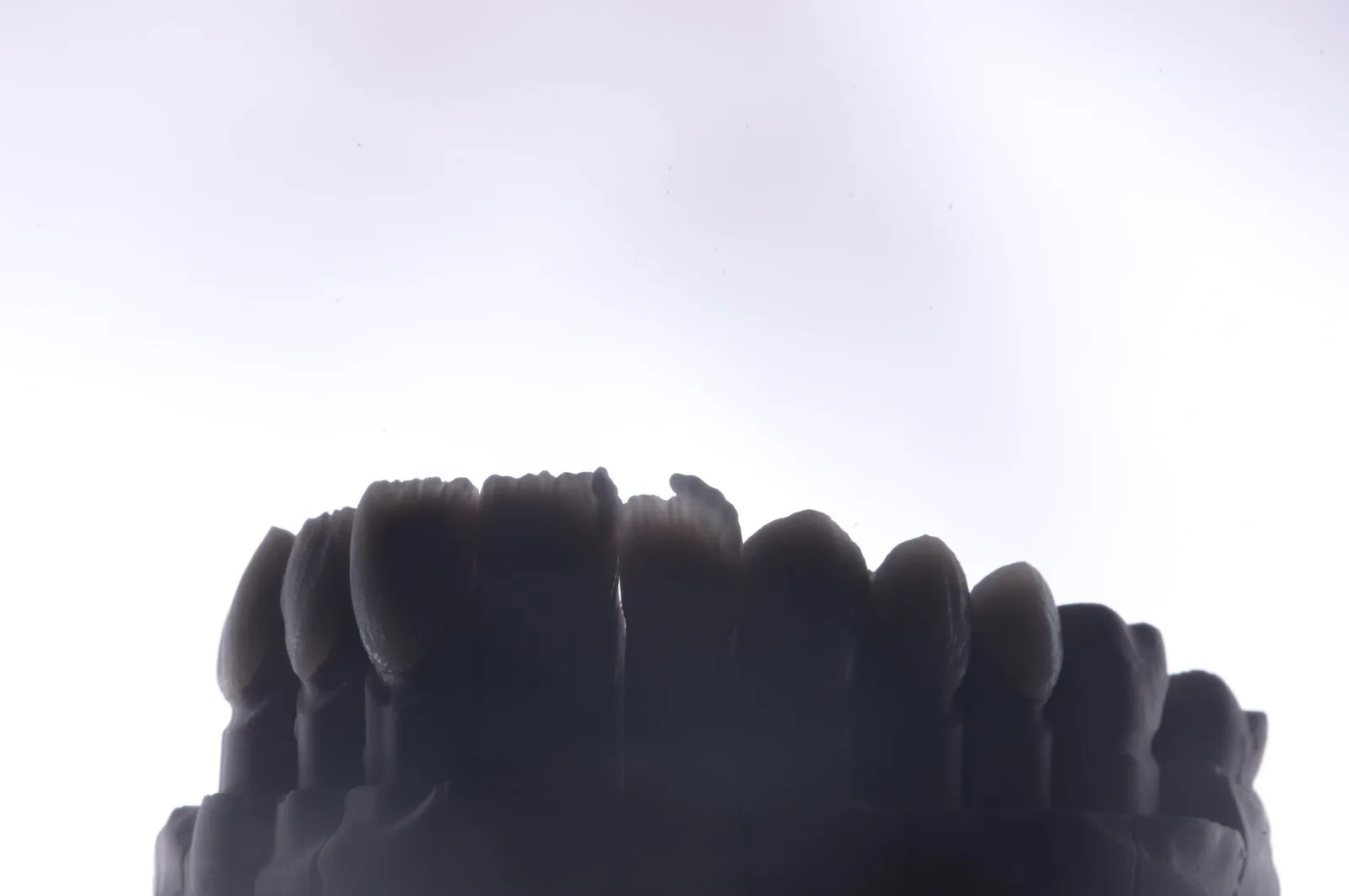
4. Shape. Line angles, incisal edge position, embrasures. Tooth shape templates help. Use pictures, not only words.
5. Shade in words. Bright and clean. Age appropriate. More or less translucency at the edge. The lower arch has been whitened.
6. The patient's goal, in their words.
Use pictures, not paragraphs
Rhodri often sends the lab a simple drawing over the photograph: outlines of where he wants the teeth, with measurements. It is not for the patient. It is for him and the ceramist to think together.
One of our alumni, who came back to teach a segment of the course, builds every lab script in presentation software: the facial analysis, the photographs of the temporaries, the measurements, and specific notes. Follow my mock-up for overall shape. Keep the embrasures between the premolars a little more open. The whole file goes to the lab by email and uploads it to the patient's chart.
That is a prescription a ceramist can use.
Talk before you prep
The most important lab communication happens before the case starts.
Do not guess. If you have a question about material, preparation or space, talk to the person who is going to make it. They will guide you, and you should follow that guidance, because you want to give them the best opportunity.
Questions worth asking:
- Which material for this patient and this bite?
- How much space do you need for the shade change?
- Do you want a finish line, and where?
- Refractory die or platinum foil?
- What records do you want from me?
Choose the ceramist for the case
When you get deep into this kind of dentistry, you do not have one lab. You have an array of ceramists.
Every ceramist has a style, and their own favorite tooth shapes come through in the work. One may suit a patient who wants a soft, youthful smile; another suits someone who wants more character. Rhodri notes that he has to send feldspathic cases abroad, because nobody near him layers it to the standard he wants.
Match the ceramist to the patient, not only to the price list.
Use the tools you have
I am looking into AI to help me draft lab prescriptions. I already use it to render a patient's smile from their photographs as a starting point for the conversation. These tools will not replace the conversation with your ceramist. They can make the paperwork faster so you spend more time on the details that matter.
Ask five ceramists, get five answers
Rhodri makes a point in our course that every dentist should hear. Ask the same question about space or material to five different ceramists, and none of them will come back with the same answer.
That is not a problem. It is why you choose your ceramist for the case and then follow their guidance. Some need more room to mask a dark preparation. Some can go thinner. Your prescription should be written for the person making it.
The takeaway
- Send the face, not only the teeth.
- Send the temporaries and say the final should follow them.
- Measure, and write the numbers down.
- Draw it when words fall short.
- Call before you prep.
Related reading: shade matching porcelain veneers and veneer temporaries.
Questions, answered.
What should a veneer lab prescription include?
Full photographs including a full face smile and shade photos, scans and photographs of the approved temporaries, tooth measurements, shape notes, shade described in words, and the patient's goals.
Why do labs change my smile design?
A ceramist working on a model may correct asymmetries that were intentional. Sending full face photos and temporary records explains the design so it is preserved.
Should I talk to the ceramist before preparing veneers?
Yes. Discuss material, space, finish lines and fabrication technique before the preparation. Their guidance protects the result.
How do I communicate veneer shape to the lab?
Use the approved temporaries as the blueprint, add measurements and drawings over photographs, and specify incisal edge position, line angles and embrasures.