Journal · 4 min read
Facial Analysis for Smile Design: Midline, Cant and Facial Thirds
I always say smile design is a denture setup. You decide where the teeth belong in the face, then you build toward it.
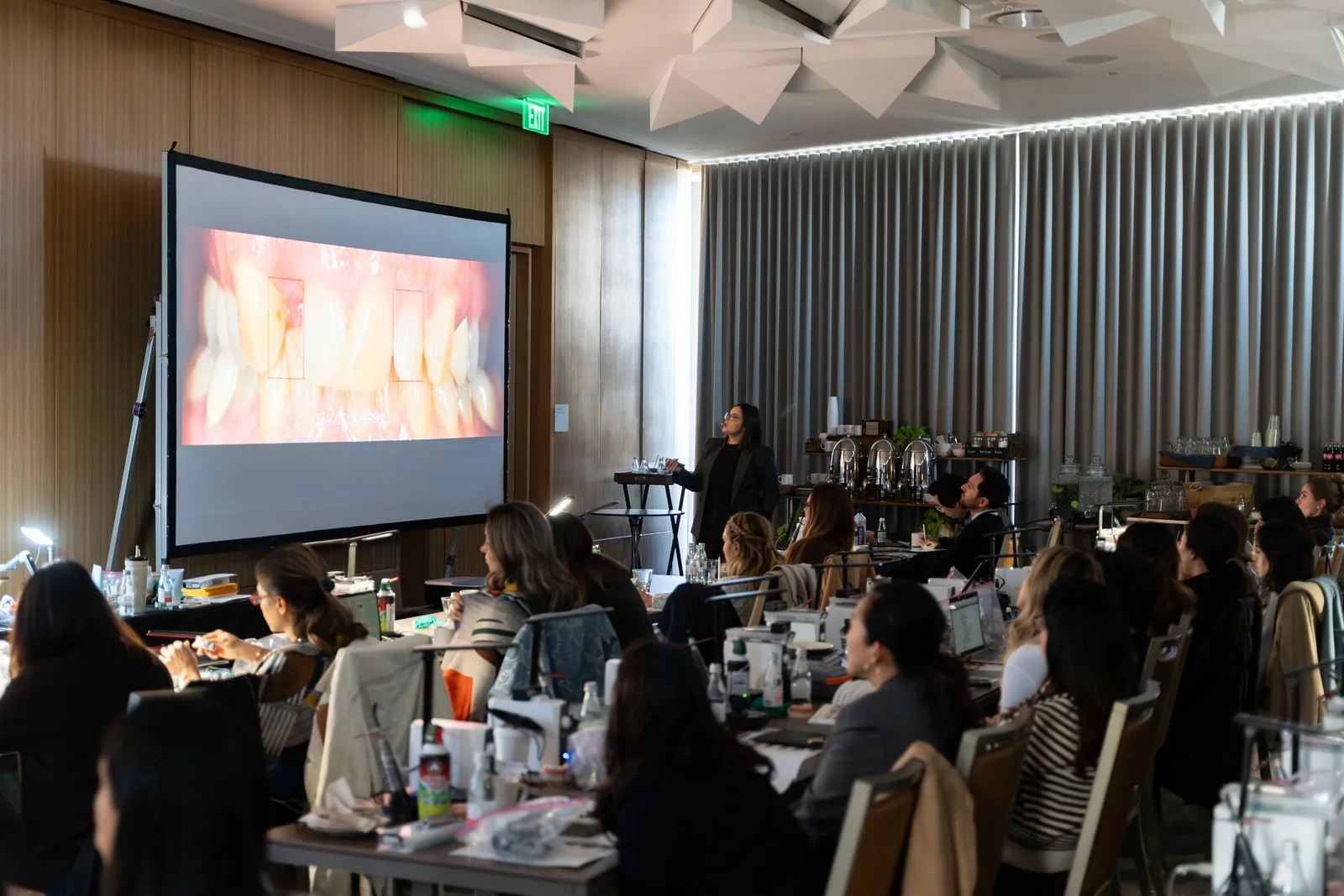
I always talk about smile design as being a denture setup.
In dental school you learned where to set the incisal edge, how to develop the buccal corridor, how to place teeth so the face looks supported. All of that feeds into smile design.
When you plan veneers, think the same way. Where would you put the incisal edge if you were setting a denture? Where would you put the buccal volume?
Start with the full face
We open every Art of Ceramic course with full face photographs of patients, because this is cosmetic dentistry. It is not a smile close-up. It is a face.
The most dramatic part of this work is not the small changes in the teeth. It is the facial difference you create by putting the teeth in the right position.
My first introduction to facial aesthetics was at NYU, through a smile evaluation form and a cosmetic program that was rare in dental schools. In my fourth year I worked on a large number of veneer cases. We would dissect the face, design the smile, then prep, temp and deliver.
The facial midline
Draw a line down the face that splits it into two equal parts. That is the facial midline.
The nose is often to one side of it. The dental midline can also deviate from it. And here is the useful part: a study from Kokich and colleagues showed that laypeople do not notice a modest offset between the dental midline and the facial midline.
What people do notice is a canted midline. A midline that tips to one side reads much faster than one that is simply off center.
The interpupillary line and cant
Next, the interpupillary line, drawn between the pupils. In most cases we want it parallel to the incisal edges.
If the incisal plane tips one way, that is a cant, and we do not want a canted smile.
Here is the trap. Take yellow, small, worn teeth and make them whiter and brighter, and the cant becomes more visible. The patient says it was not like this before. It was. It was just less noticeable. A careful facial analysis catches that before you start.
We are seeing more of it after orthodontics. Move teeth on one side and it can have an opposite effect on the other. Patients come out of aligners ready for veneers and are in a worse position than when they started.
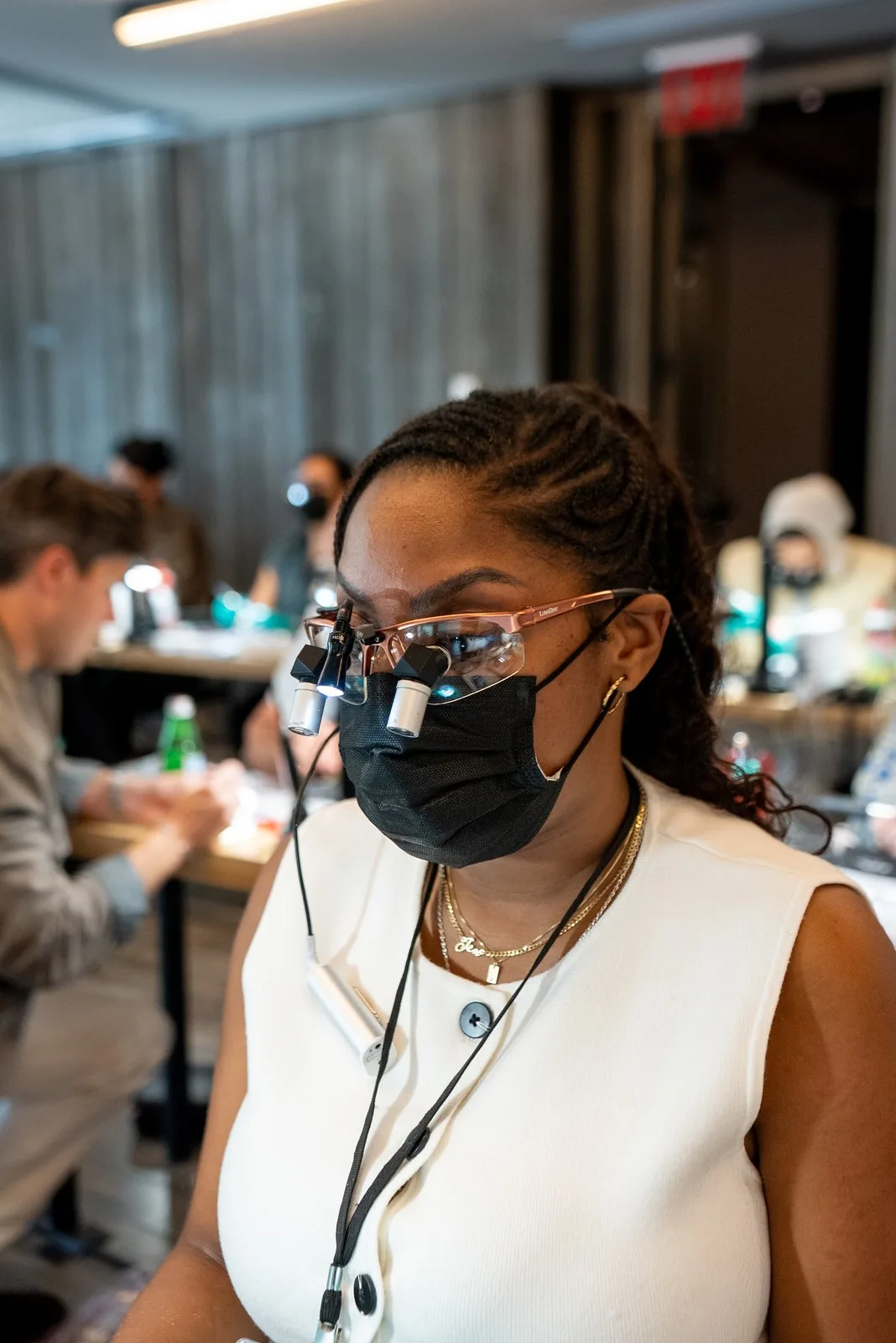
Facial thirds
I break the face into thirds: hairline to brow, brow to the base of the nose, base of the nose to the chin.
A long lower third often means a gummy smile. A collapsed lower third often means bruxism, broken teeth and worn teeth. Just by looking at a face, you can tell a lot about the dentition before you look in the mouth.
Beauty is not symmetry
Audrey Hepburn is considered one of the most beautiful women who ever lived. Force her face into perfect symmetry and she starts to lose the beauty.
So is beauty symmetry, or the asymmetries we contour and correct ever so slightly? We never want perfection. Perfection does not exist in nature.
In practice that means balancing, not mirroring. On the weaker side of a smile, we build out more volume. On the stronger side, we add less, because it already projects. The ceramist has to see the face to understand why.
Lips and tooth shape
The lips change the plan.
A full or low lip line, natural or from filler, casts a shadow on the teeth. Those teeth need to be a little whiter and denser, with less translucency, or they read gray.
Shape follows the face too. Rhodri points out that on a patient with a lot of lip filler, round teeth with heavy incisal translucency look wrong. More trapezoid or triangular shapes with little translucency suit them better and read longer.
Make them laugh first
A self-conscious patient will hide their gums. They will give you a smaller, careful smile.
So do not pick up the camera right away. Make them laugh. You need their real smile to analyze it.
Measure, then draw
Facial analysis becomes useful when it turns into numbers and pictures the lab can follow.
Rhodri measures the teeth in the mouth with digital calipers and decides how long and wide he wants them to be. Then he draws simple outlines over the photograph and sends the measurements with it. When he asks for a wax-up, it is not arbitrary.
I have also started rendering patients' smiles with AI from their photographs, as a starting point for the conversation. It is a sketch, not a plan. The plan still comes from the face, the measurements and the mock-up.
The takeaway
- Set the smile like a denture: edge position, then volume.
- Check the midline for cant, not just offset.
- Keep the incisal plane parallel to the interpupillary line.
- Read the facial thirds for gumminess and wear.
- Balance, do not mirror.
Related reading: smile design photography and veneer preparation design.
Questions, answered.
What is facial analysis in smile design?
It is the evaluation of the face before designing a smile: facial and dental midlines, the interpupillary line and incisal plane, facial thirds, lip line and asymmetries, so the teeth are planned to suit the face.
Does the dental midline need to match the facial midline?
Not exactly. Research shows laypeople tolerate a modest offset, but a canted dental midline is noticed quickly.
What is a canted smile?
A smile where the incisal plane is not parallel to the interpupillary line, so the teeth appear tilted relative to the face.
Should a smile be perfectly symmetrical?
No. Natural beauty includes small asymmetries. Smile design aims for balance in the face rather than mirror-image symmetry.