Journal · 4 min read
Porcelain Layering: What Dentists Should Understand About the Build
You do not have to layer porcelain yourself. You do have to understand what the ceramist is building, or you cannot ask for it.
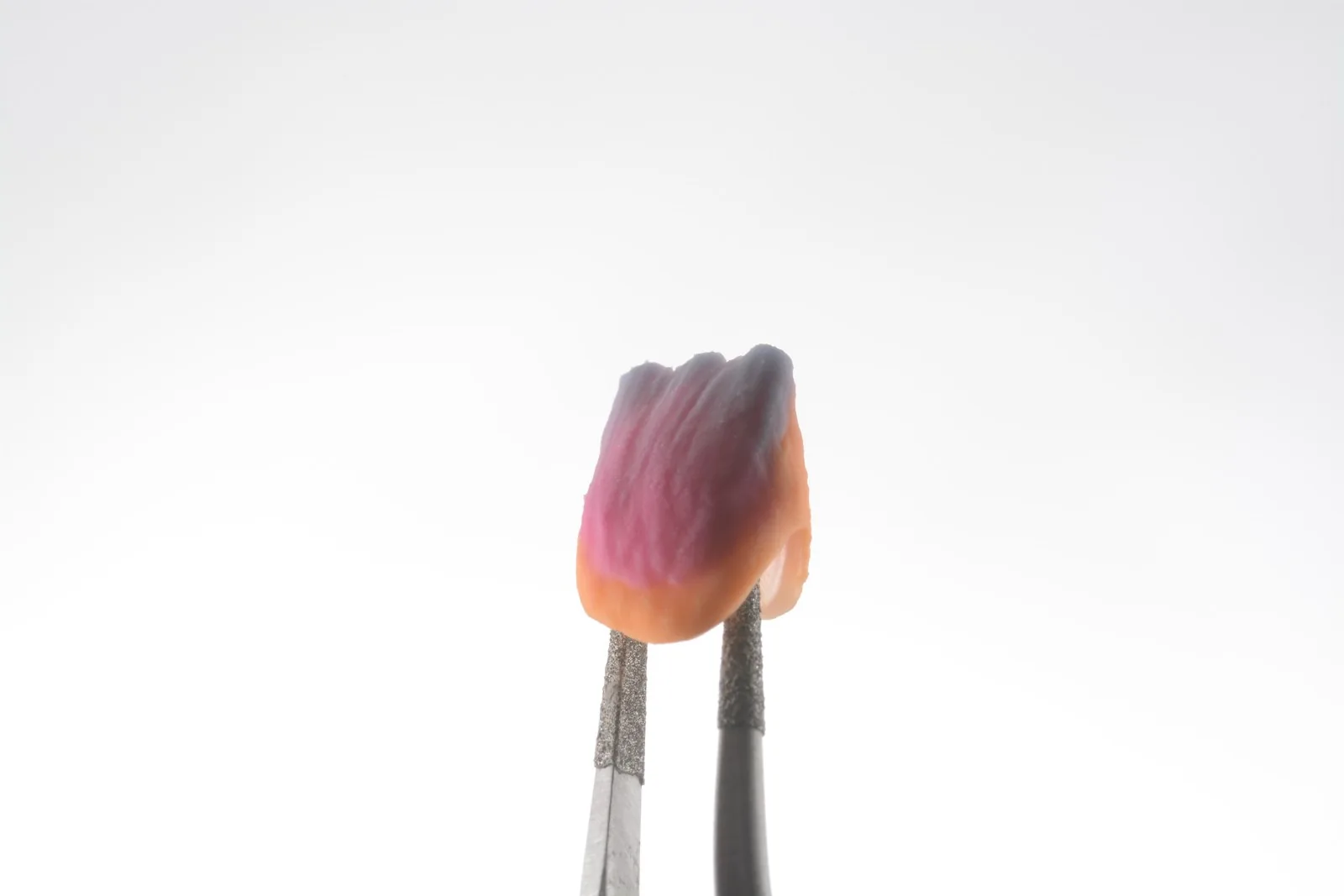
Teeth are not a flat color.
They are layers of structure that light passes through, scatters and bounces back from. A layered porcelain veneer is an attempt to rebuild that, one firing at a time.
Most dentists never sit at a ceramist's bench. You do not need to. But if you understand what the ceramist is building, your prescriptions change, your photographs change, and your results change.
The anatomy you are copying
Dr. Rhodri Thomas, who co-teaches Art of Ceramic with me, spends a full morning on this, and it is my favorite kind of lecture to watch.
He compares a natural tooth to an eye. The eye is beautiful because it has depth: overlapping layers, colors, light passing through. Simplify it and make it opaque and you can still tell it is an eye, but it has lost its beauty.
Teeth are the same. There is warmth coming out of the gingival third, a gradient of color reaching toward the incisal edge, a halo on the edge, and opalescence underneath. Sometimes the halo is wider or darker. Sometimes the opalescence is more blue, purple or orange.
A ceramist reproduces that with layers. The core sets the body color, enamel and translucent layers create depth, effects build the incisal detail, and glaze and texture finish the surface.
Why age changes the build
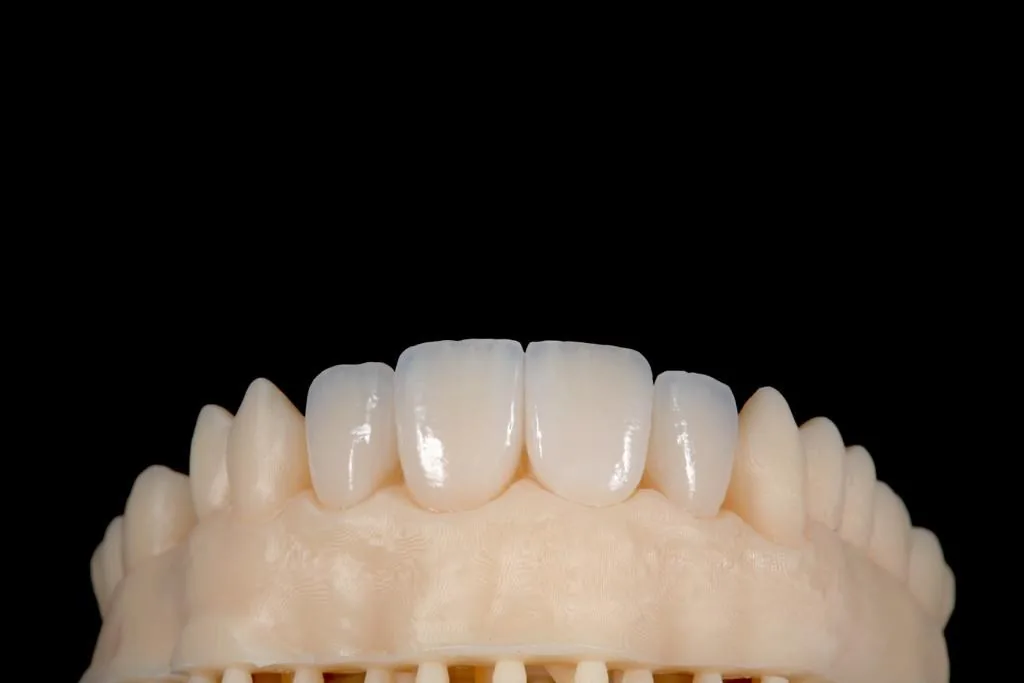
Teeth change as people age, and the build has to follow.
Enamel becomes more translucent and a little more chromatic with age. Dentin does the same, and it has more effect on what you see. So a young patient's tooth and an older patient's tooth are built differently even when the shade tab looks similar.
This is why I write "age appropriate" on prescriptions. Bright and clean, but believable for that face.
The dentist's job is shape and information
Rhodri says the dentist's main goal in a ceramic case is to be the shape guide. You give the color information, and you lead on shape, phonetics and function. It is different from composite, where you do everything at once yourself.
Shape is where the illusions live:
- Line angles control how wide a tooth reads. Line angles further apart make a tooth look wider.
- A flat or slightly inverted mid-facial lets light ripple across the surface. A domed mid-facial kills it.
- Translucency at the edge makes long teeth look shorter. Short teeth that need to look longer should have very little.
If you do not ask for these things, you will not get them. Not because the ceramist lacks skill, but because they have never met your patient.
Look for details in nature
Rhodri photographs nice teeth wherever he finds them and keeps them in a folder. He has a home setup where he practices layering on extracted teeth, building halos, translucency and the little cracks that come off an incisal edge.
That sounds obsessive. It is. It is also the reason he can describe a tooth to a ceramist in a way that gets it built.
Start looking. Look for the halo. Look at whether it is amber or pinkish orange. Look for white spots flanking it. Look for where the dentin comes in. If you can see it, you can communicate it.
What to send the ceramist
- Photographs with shade tabs in frame, plus one underexposed photo to show translucency.
- Photographs and scans of the approved temporaries, so the shape is already solved.
- The face: a full face smile photo, because the ceramist is working on a model.
- Words that matter: age appropriate, bright and clean, natural to them, more or less translucency at the edge.
- Measurements of the teeth and where you want them.
Why I favor feldspathic
Layered feldspathic porcelain is the material most favorable in my eyes for anterior veneers, because it gives the ceramist room to build that depth.
It also asks the most of everyone. It needs a ceramist with real skill and a bite that will not chip it. Rhodri has said that in the UK he cannot find a ceramist who layers feldspathic to his standard, so he sends those cases abroad. The material is only as good as the hands building it.
Texture finishes the illusion
The last layer is not a color at all. It is the surface.
Natural teeth have texture: horizontal lines, vertical lobes, small irregularities that catch light. Older teeth often have more worn, smoother surfaces. A veneer that is perfectly glossy and flat looks man-made, even with beautiful layering underneath.
Rhodri takes surface texture inspiration from the patient's own teeth before treatment. Photograph them. Send them. Ask for texture that belongs to that person.
The takeaway
You are the shape guide and the information source. The ceramist is the builder.
Learn the anatomy. Photograph the details. Ask for what you see. That is how a layered veneer ends up looking like it grew there.
Related reading: shade matching porcelain veneers and writing a veneer lab prescription.
Questions, answered.
What does porcelain layering mean for veneers?
Layered porcelain veneers are built by hand in successive layers, typically a body or dentin layer, enamel and translucent layers, incisal effects, then glaze and surface texture, to imitate the depth of a natural tooth.
Do dentists need to layer porcelain themselves?
No. Dentists need to understand the layers so they can lead on shape and send the photographs, shade information and records that let the ceramist build a natural result.
Why do some veneers look flat or opaque?
Usually the build lacked depth or the opacity did not suit the patient. Better shade photographs and clear communication about translucency and age help.
Is feldspathic porcelain layered?
Yes. Feldspathic veneers are typically layered by hand on a refractory die, which is why they depend so much on the ceramist's skill.